Google: 4.3 · 563 reviews
.png)
Yung Yen holds consecutive Michelin Plate recognition for 2024 and 2025, placing it among Kaohsiung's acknowledged Taiwanese dining addresses. The kitchen works in a price bracket accessible by the city's standards, with a Google score of 4.3 across more than 500 reviews pointing to consistent execution. For visitors tracking the city's roast and slow-cooked traditions, it represents a practical entry point into that conversation.
 Discover on Pearl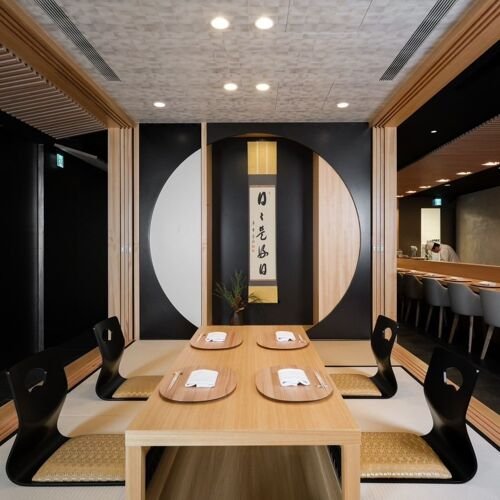
Kaohsiung's Roasting Tradition and Where Yung Yen Sits Within It
Taiwan's southern port city has long maintained a distinct culinary identity from Taipei, and nowhere is that separation clearer than in its approach to roasted and slow-cooked meats. Where Taipei's dining scene has tilted toward modernist Taiwanese reinvention — venues like Fujin Tree Taiwanese Cuisine & Champagne (Songshan), Golden Formosa, and Mipon each reframing heritage dishes through a contemporary lens — Kaohsiung's neighbourhood kitchens have tended to hold their ground on technique. The coal-fired, charcoal-roasted, and slow-braised registers that define southern Taiwanese cooking are less a trend here than a baseline expectation.
Within that context, Yung Yen occupies a position that the Michelin guide has twice acknowledged: Plate recognition in both 2024 and 2025, a consecutive citation that signals sustained kitchen consistency rather than a single strong year. In a city where the accessible mid-range tier is genuinely competitive , Beef Chief (Zihciang 2nd Road) holds a comparable price bracket with its own devoted following , back-to-back Michelin notation is a meaningful differentiator. It places Yung Yen in a peer group that earns institutional recognition without operating at the upper price tiers occupied by venues like GEN at the Cantonese end, or Sho and Papillon at the leading of Kaohsiung's formal dining range.
The Art of the Roast: What Chinese and Taiwanese Technique Demands
Char siu and the broader tradition of Chinese roasting present a technical challenge that is easy to underestimate. The margin between lacquered, glossy pork that yields at the right tension and an overworked, dry result is measured in minutes and in fire management decisions that accumulate across years of practice. Maltose, fermented red bean curd, honey glazes applied in stages, and the specific heat profile of a hanging roast oven each play a role , and the sequencing is not forgiving. The same discipline applies to siu yuk, Cantonese-style crispy roast pork, where the skin scoring depth and the timing of the final blast of high heat determine whether you get a clean, crackling shatter or a chewy disappointment.
Taiwanese roasting absorbs these Cantonese foundations and layers in its own inflections: rice wine marinades, five-spice profiles that lean more heavily on star anise and Sichuan pepper than the mainland variants, and a greater tendency to serve alongside pickled mustard greens that cut through fat rather than sweet dipping sauces. The result is a regional canon with enough internal variation to reward close attention, and enough technical rigour to separate practitioners who have genuinely mastered the form from those working from approximations.
Yung Yen's consecutive Michelin recognition , two plates across two guide cycles , suggests the kitchen is operating from real mastery in this register rather than approximation. Michelin's Plate designation is awarded for food quality alone, not room or service, which makes it a relatively direct signal about what is happening on the plate.
Pricing, Access, and the Kaohsiung Mid-Range
At the $$ price point, Yung Yen sits in a tier where value accountability is highest. Diners at this level in Kaohsiung are comparing against a wide field: hawker-adjacent night market options, established family-run operations that have been refining their approach for decades, and newer entrants trying to win the same audience. Holding a Michelin Plate at this price tier is a harder editorial argument than holding one at the leading of the market, where ingredient cost and labour can absorb more slack. It implies that the kitchen is making deliberate, technically sound decisions rather than buying its way to a result.
For travellers oriented around Kaohsiung's broader food scene, the mid-range Taiwanese tier offers the clearest window into how the city actually eats day-to-day. Venues like Chao Ming and Chang Sheng 29 anchor different corners of that same price space, and Bo Home and A Fung's Harmony Cuisine extend it into slightly different culinary registers. Cross-referencing these options against Yung Yen gives a useful map of what the city's mid-register dining actually covers.
A Google score of 4.3 across 525 reviews adds a second data layer. That volume of reviews is large enough to be statistically meaningful and suggests the kitchen is drawing repeat visitors rather than operating on novelty. Consistency at this scale and price point is an achievement in itself.
Kaohsiung in the Taiwan Dining Picture
Taiwan's Michelin ecosystem is now spread across multiple cities and formats. Tainan has built recognition around its own deep-rooted food culture, with spots like A Cun Beef Soup (Baoan Road) representing the city's commitment to hyper-specialised execution at accessible price points. Taichung has developed its own fine-dining tier, anchored by venues like JL Studio. Taipei remains the centre of gravity for modernist and high-formal Taiwanese, with logy among those pushing the technical envelope. Mountain and indigenous cooking traditions are increasingly represented in the guide as well, through places like Akame in Wutai Township and Volando Urai Spring Spa & Resort in Wulai District.
Kaohsiung's contribution to this national picture is grounded, unpretentious, and technically serious. Yung Yen belongs to that tradition, and its two successive Plate citations suggest it is among the addresses that sustain the city's standing in the guide.
Planning a Visit
Yung Yen operates at a price level where walk-ins are more common than formal reservation systems, though arrival timing matters: Kaohsiung's mid-range Taiwanese kitchens that hold Michelin recognition tend to fill quickly at peak lunch and dinner windows, particularly on weekends. The city rewards a broader itinerary approach: Kaohsiung's food neighbourhood density means a well-planned day can move between roast meat specialists, seafood counters, and hawker stalls without significant travel time. For a full orientation to what the city offers beyond individual venues, our full Kaohsiung restaurants guide maps the scene across price tiers and cuisine types. Travellers planning around the whole city should also consult our Kaohsiung hotels guide, our Kaohsiung bars guide, our Kaohsiung experiences guide, and our Kaohsiung wineries guide to build a complete picture of the city's offer.
Peers Worth Knowing
A compact peer snapshot based on similar venues we track.
Continue exploring
More in Kaohsiung
Restaurants in Kaohsiung
Browse all →
Bars in Kaohsiung
Browse all →

At a Glance
- Cozy
- Family
- Casual Hangout
- Standalone
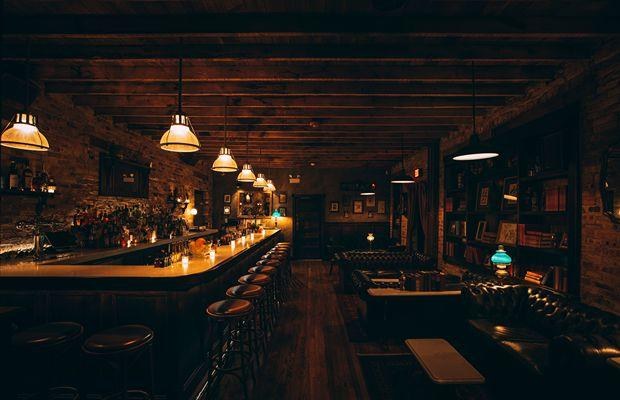
Light-drenched room over two levels with wooden furnishings imparting a warm home-like feel.