Moringa Indian Restaurant
Our verdict
Moringa Indian Restaurant serves Indian dinner at 3670 E Main St in Waterbury, with casual service, conversational pacing, and a standard rhythm for evening plans.

Pearl is the En Primeur Club membership app, where members save venues, book tables and use the concierge.
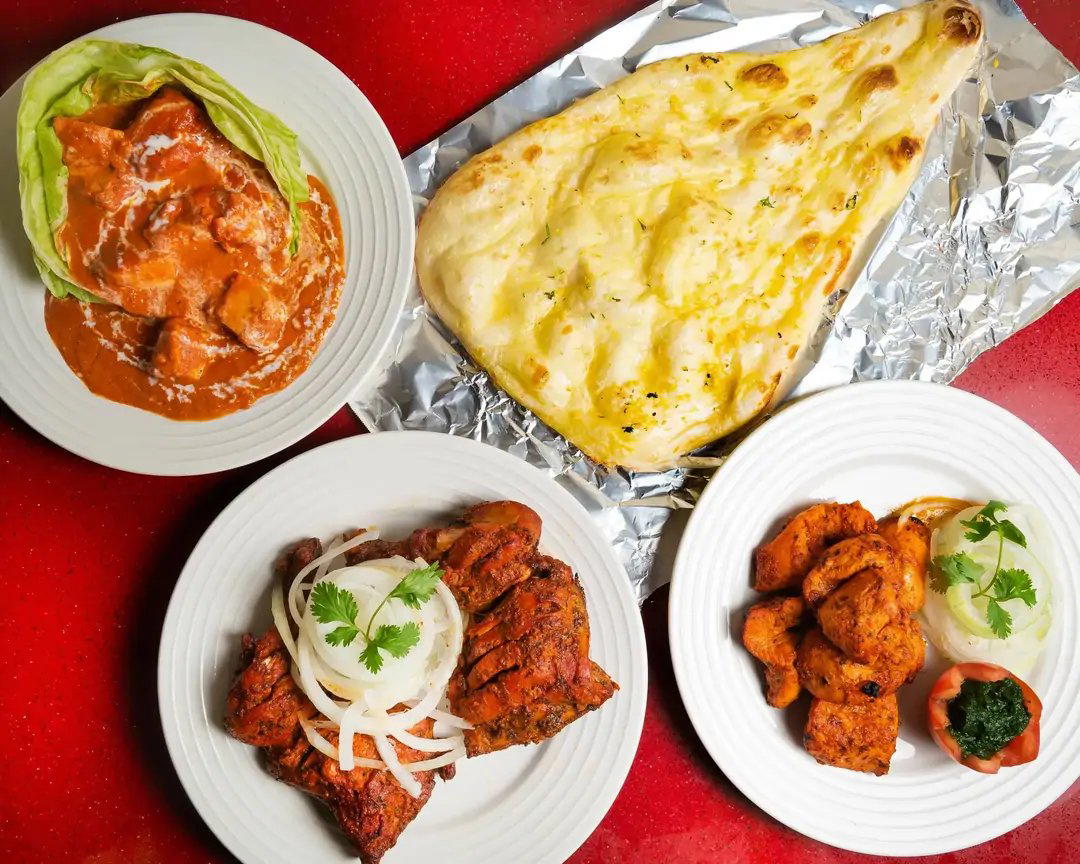
Indian Cooking in Vermont's Corner of New England
Waterbury, Connecticut sits within a state whose restaurant scene has historically leaned on Italian-American red-sauce houses and diner classics. Against that backdrop, a restaurant committed to Indian cooking occupies a particular position: it addresses a gap rather than competing within an established local tradition. Moringa Indian Restaurant, at 3670 East Main Street, operates in that space, bringing a cuisine defined by spice layering, slow-cooked proteins, and fermented grain bases to a city where such cooking remains relatively rare at the neighborhood level.
The address places it along East Main Street, a commercial corridor that connects Waterbury's residential east side to its downtown core. Arriving on that stretch, the visual register is practical rather than theatrical: a working-class commercial street where the restaurant's presence signals function over atmosphere. That context matters because Indian restaurants in smaller American cities often succeed precisely by serving a community that would otherwise travel significantly further for comparable cooking. The sourcing and preparation traditions behind Indian cuisine, particularly those involving fresh spices ground in-house, slow-cooked legumes, and tandoor-fired breads, carry their own argument for why a place like this earns its position in a city like Waterbury.
Ingredient Sourcing and the Logic Behind Indian Cooking
The editorial case for paying attention to Indian cuisine in a New England city is partly an argument about what the food actually requires to be done well. Unlike cuisines where protein quality or a single premium ingredient carries the dish, Indian cooking at its most disciplined depends on the cumulative precision of spice blending, the freshness of whole spices ground to order, and the timing of tempering, the process of blooming aromatics in fat to release volatile compounds. When those steps are executed from pre-ground, shelf-stable mixes, the result flattens. When they are done with fresh whole spices, the aromatic lift and layered heat profiles that define the cuisine become legible in the finished plate.
That sourcing and preparation logic applies across the spectrum of Indian regional traditions, from the mustard-seed and curry-leaf foundation of South Indian cooking to the cardamom-and-clove complexity of North Indian gravies. In the American context, Indian restaurants in smaller markets sometimes simplify toward a standard format: a set of curries calibrated for a broad palate, naan as the default bread, and tikka masala as the anchor dish.
It is worth placing this in a broader American fine-dining context for calibration. Restaurants like Blue Hill at Stone Barns in Tarrytown and Single Thread Farm in Healdsburg have made ingredient provenance the organizing principle of their menus, treating sourcing as the primary editorial statement. Indian cooking, by its nature, has always operated on a version of that logic, because the cuisine is built on ingredients, spices, legumes, and fermented bases, that degrade noticeably in quality when they are not fresh. The argument for sourcing discipline is baked into the tradition itself.
Waterbury's Dining Context
Connecticut's restaurant scene concentrates its most-discussed addresses in New Haven and Hartford, with New Haven's pizza tradition and a handful of James Beard-recognized kitchens drawing the most sustained attention. Waterbury sits between those centers, and its dining options reflect a city of its size and income profile: reliable, community-serving, and less likely to generate the kind of national editorial coverage that attaches to larger markets. That is not a criticism. It describes a city where restaurants succeed by serving their immediate community well rather than by positioning for a national audience.
In that context, a restaurant addressing Indian cuisine fills a real gap. The nearest concentrations of well-developed Indian restaurant scenes in New England are in the Greater Boston area and in parts of New Jersey and New York City, where the community infrastructure supports everything from regional South Indian specialists to Mughal-influenced North Indian kitchens. Waterbury's version is operating without that competitive density around it, which means it likely serves as the primary option for its cuisine type across a reasonable geographic radius.
For reference on what the wider American dining landscape looks like when Indian cooking receives serious culinary treatment, the progression from neighborhood staple to nationally recognized kitchen is visible in cities like New York and Washington, D.C. Atomix in New York City, while not Indian in cuisine, demonstrates how non-Western culinary traditions operating at the highest technical level can reframe critical expectations for an entire cuisine category. The comparison is structural rather than culinary: both traditions benefit when a kitchen treats the cuisine's own internal logic with rigor rather than adapting it toward assumed Western preferences.
For those building a broader picture of the Waterbury dining scene, Hen of the Wood represents the regional American approach to Vermont-adjacent sourcing, and our full Waterbury restaurants guide maps the broader options across cuisine types and price points. Elsewhere in the Northeast and beyond, kitchens like Le Bernardin in New York City, The French Laundry in Napa, Alinea in Chicago, Lazy Bear in San Francisco, Providence in Los Angeles, Addison in San Diego, The Inn at Little Washington, Bacchanalia in Atlanta, Brutø in Denver, Causa in Washington, D.C., Frasca Food and Wine in Boulder, Emeril's in New Orleans, and 8 1/2 Otto e Mezzo Bombana in Hong Kong each demonstrate what category-defining execution looks like across different traditions and markets.
Planning Your Visit
Moringa Indian Restaurant is located at 3670 East Main Street in Waterbury, Connecticut. East Main Street is accessible by car, and street parking along the corridor is generally available. For visitors combining a meal here with broader Waterbury exploration, the address sits on the city's east side, within reasonable distance of downtown Waterbury's core.
Frequently asked questions
Does Moringa Indian Restaurant work for a family meal?
Indian cuisine's shared-plate format, multiple dishes served alongside rice and bread, transfers naturally to family dining across age groups. Waterbury's east side commercial setting on East Main Street suggests a neighborhood-facing room rather than a formal one, which tends to suit groups with varying comfort levels. The structure of the food itself does much of the work: dishes arrive at the table's center and everyone eats from them, which sidesteps the usual problem of ordering separately for children and adults.
What kind of setting is Moringa Indian Restaurant?
Moringa sits on East Main Street, a working commercial corridor on Waterbury's east side. That address places it squarely in neighborhood-restaurant territory rather than the destination-dining category that clusters in New Haven or Hartford. Expect a room geared toward regular local diners rather than out-of-town visitors.
Is Moringa Indian Restaurant one of the few Indian dining options in Waterbury, Connecticut?
Indian restaurants in smaller Connecticut cities outside New Haven and Hartford are sparse, and Waterbury fits that pattern. Moringa's location at 3670 East Main Street positions it as one of the more accessible Indian dining options on the city's east side. For residents who do not want to travel to Hartford or New Haven for Indian food, that geographic availability carries practical weight.
What should I order at Moringa Indian Restaurant?
Indian menus at the neighborhood level in Connecticut typically include a range of curries, rice preparations, and leavened breads that allow first-time visitors to sample broadly without committing to a single dish. Asking staff about the kitchen's regional focus, whether North Indian, South Indian, or a mixed menu, is the most reliable way to orient an order.
Comparison Snapshot
Comparable venues nearby, for context on price, style, and recognition.
| Venue | Cuisine | Price | Notes |
|---|---|---|---|
| Moringa Indian RestaurantThis venue (the venue you are viewing) | Indian | Not listed | Not listed |
| Athithi Indian Cuisine | Authentic Indian Cuisine | $20–30 | Gateway Plaza |
| Viva Zapata | Authentic Mexican Cantina | $20–30 | Downtown |
| Saybrook Fish House | New England Seafood | $20–30 | Rocky Hill |
| BarNaan | Modern Indian with Signature Cocktails | $50–100 | Brookfield |
| Coyote Flaco | Authentic Mexican | $20–30 | Southwest Hartford |
Continue exploring
More in Waterbury
Restaurants in Waterbury
All restaurants in Waterbury →

Details
- Casual Hangout
- A La Carte
Current opening hours
- Monday
- Closed
- Tuesday
- 11 AM–10 PM
- Wednesday
- 11 AM–10 PM
- Thursday
- 11 AM–10 PM
- Friday
- 11 AM–10 PM
- Saturday
- 11 AM–10 PM
- Sunday
- 11 AM–10 PM
Hours can change for holidays and private events. Hours as of .