Batta Porta
Our verdict
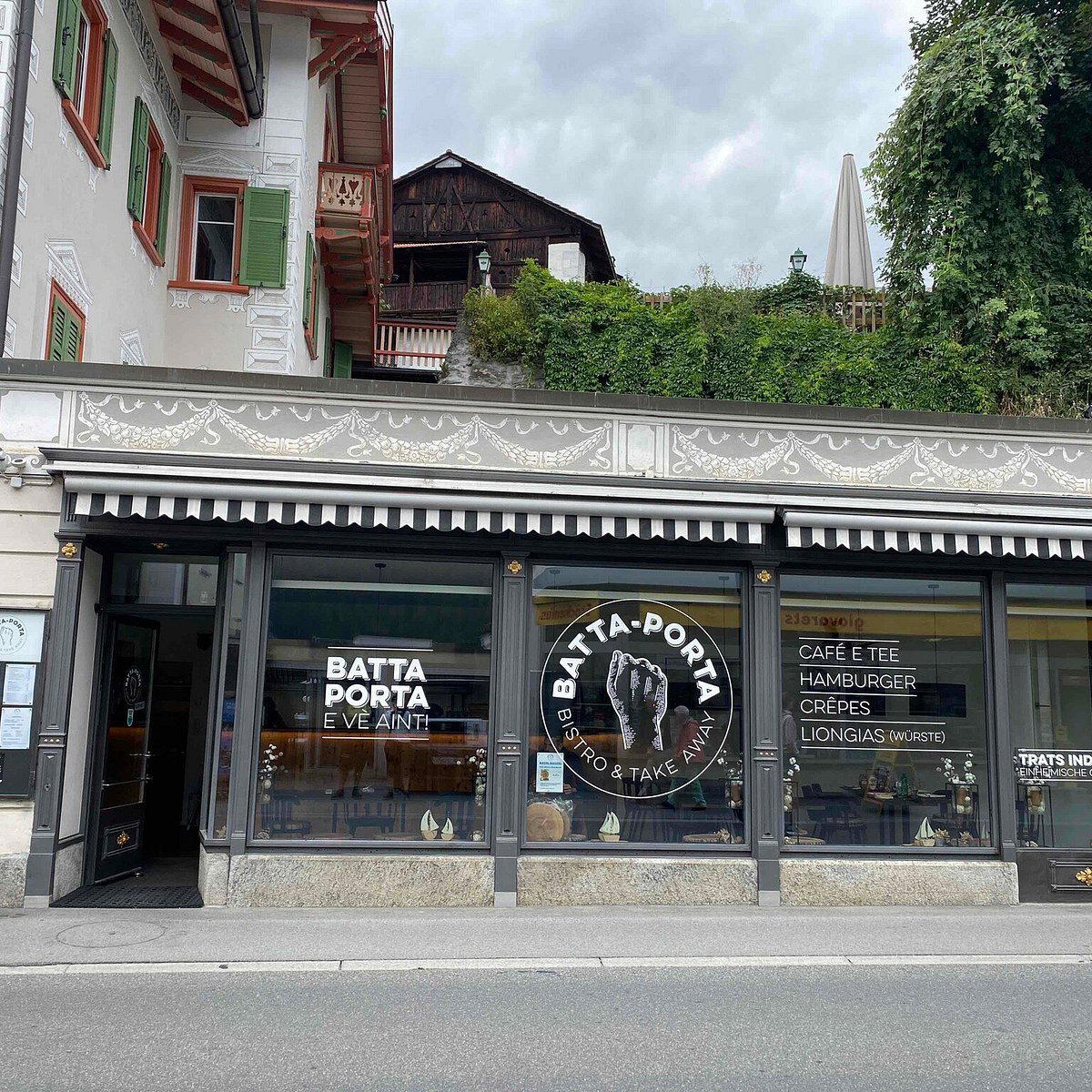
Batta Porta sits on Stradun, Scuol's main arched street in the Lower Engadine, where the architectural tradition of sgraffito-decorated facades sets the mood before you reach the door. In a valley where alpine sourcing shapes every serious kitchen, this address places you inside one of Switzerland's most distinctive regional food cultures. For visitors working through the Engadine's dining options, it is a practical and atmospheric starting point.

Pearl is the En Primeur Club membership app, where members save venues, book tables and use the concierge.
Stradun and What It Signals Before You Eat
Scuol's Stradun is not a street you stumble onto. The Lower Engadine's main artery runs through a town whose buildings carry sgraffito plasterwork, a centuries-old Rhaeto-Romanic decorative tradition where patterns are scratched through the outer coat to reveal contrasting pigment beneath. Arriving at Stradun 334 means arriving in that context: architecture as cultural argument, a place where the built environment insists on local identity before a single plate arrives. Batta Porta occupies this address, which places it inside the conversation that defines Scuol's appeal to visitors willing to travel 90 minutes from St. Moritz or three-plus hours from Zurich for something that feels genuinely rooted rather than resort-manufactured.
The Lower Engadine sits at roughly 1,250 metres, in a valley where the Inn river runs eastward toward Austria. The altitude, the Germanic-Romansh bilingualism, and the relative remoteness from Switzerland's western fine-dining axis all shape what kitchens here work with and how they position themselves. This is not the Valais or Ticino, and it is not the Graubünden of Schloss Schauenstein in Fürstenau. Scuol operates at a different register: smaller, quieter, with a food culture that reflects the self-sufficiency of an alpine valley rather than the international visibility of a destination restaurant circuit.
Alpine Sourcing in a Valley That Still Practises It
The editorial angle on any serious kitchen in the Lower Engadine starts with geography, because geography here is not decorative, it is functional. The Engadine's short growing season, high-altitude pastures, and historic isolation produced a food tradition built around what could be produced locally and preserved through winter: cured meats, dried grains, root vegetables, dairy from cattle grazed above the tree line. That tradition did not disappear when the valley opened to tourism. It adapted, and in the better kitchens it informs purchasing decisions rather than simply menu language.
Across the Swiss alpine dining scene, the venues that hold critical attention tend to be those that treat proximity to source as a structural commitment rather than a talking point. Magdalena in Schwyz built its alpine-vegetarian identity around exactly this discipline. Memories in Bad Ragaz operates at the high end of modern Swiss with sourcing that reflects its Rhine Valley position. In Scuol, the question a visitor brings is whether a given kitchen is working with the valley's actual larder or importing a generic alpine aesthetic. Stradun addresses have the advantage of being inside the community rather than at the periphery of a resort complex, which tends to mean shorter chains between producer and kitchen.
The Graubünden canton, which contains both Scuol and Fürstenau, has a sourcing culture that runs from mountain dairy to wild game to river fish. Venison, chamois, and char appear across the region's menus in autumn. Maluns, the canton's distinctive fried potato-and-flour dish, represents the kind of hyper-local preparation that separates a kitchen serious about Graubünden food from one that merely references it. For a visitor orienting themselves in this tradition, understanding the county's food vocabulary matters more than any single dish recommendation.
Where Batta Porta Sits in Scuol's Dining Picture
Scuol draws two distinct visitor streams: spa tourists using the thermal baths at the Bogn Engiadina, and active travellers using the town as a base for hiking, cycling the Inn valley trail, or skiing at Motta Naluns. These audiences do not always overlap in dining expectation, which creates a spread of options across the town from simple Stübli to more considered local cooking. Batta Porta's Stradun address places it in the centre of town rather than attached to a hotel or resort complex, a positioning that generally signals orientation toward residents and repeat visitors as much as first-time tourists.
For comparison context within Switzerland's wider dining picture, the top tier of the country's alpine restaurant scene now operates at price points and critical ambitions that place Scuol's options in a different bracket entirely. Da Vittorio in St. Moritz and Cheval Blanc by Peter Knogl in Basel operate at the formal fine-dining ceiling. focus ATELIER in Vitznau represents the creative modern Swiss tier. Scuol's appeal is different: it offers regional specificity that those addresses, for all their technical accomplishment, cannot replicate. A kitchen on Stradun is not competing with those rooms. It is doing something else, and visitors who understand that distinction tend to leave more satisfied than those expecting the Engadine to produce the same experience as Zurich or Basel.
Other points of reference on Switzerland's broader circuit Maison Wenger in Le Noirmont, Einstein Gourmet in Sankt Gallen, Hotel de Ville Crissier in Crissier, demonstrate the country's range from Jura to eastern cantons. Scuol and the Lower Engadine represent the furthest eastern reach of that range, closest to the Austrian border and furthest from the French-Swiss culinary gravity that shapes the west. That distance is part of what makes the valley's food culture worth seeking out on its own terms. For those exploring Switzerland's wider alpine dining circuit, La Table du Valrose in Rougemont, Mammertsberg in Freidorf, and Skin's in Lenzburg offer further points of comparison across different regional traditions. Outside Switzerland, addresses like Le Bernardin in New York City and Lazy Bear in San Francisco show how producer-focused sourcing translates in entirely different urban contexts. La Brezza in Ascona and The Japanese Restaurant in Andermatt round out the Swiss alpine visitor's reference set.
Planning a Visit to Scuol
Scuol is reached by the Rhaetian Railway, which runs the Engadine line from Landquart with a journey time of approximately two hours; the train station sits a short walk from Stradun. The thermal baths at Bogn Engiadina are the town's other primary draw and are leading visited in the morning before the day-visitor crowd arrives. For dining, Scuol's options are spread across a compact centre, and Stradun addresses are walkable from both the station and the spa. Our full Scuol restaurants guide covers the broader field. Specific hours, pricing, and reservation details for Batta Porta are best confirmed directly, as the venue's operational information is not centrally listed.
Frequently asked questions
Would Batta Porta be comfortable with kids?
Scuol itself is oriented toward active and family travel, with the Bogn Engiadina thermal baths drawing a broad demographic to the Stradun area where Batta Porta is located. That context tends to produce dining rooms accustomed to mixed-age tables. check the venue's official channels at Stradun 334 to confirm seating arrangements before visiting with young children.
What kind of setting is Batta Porta?
Batta Porta sits on the Stradun in Scuol, the Lower Engadine's main street, which is defined by sgraffito-decorated historic buildings and a pace that slows noticeably compared to larger Swiss resort towns. The address alone places the venue within walking distance of Scuol's thermal spa and the Rhaetian Railway station, positioning it as a natural stop for both spa visitors and travellers passing through on the Engadine line.
Is Batta Porta a good option for dining after arriving by the Rhaetian Railway in Scuol?
The Rhaetian Railway's Engadine line from Landquart takes approximately two hours to reach Scuol, and the station sits close to the Stradun, making Batta Porta at Stradun 334 a practical first stop after arrival. Scuol is a small town with a focused dining scene split between spa tourists and active travellers, so tables can fill during peak periods in summer and winter. Confirming a reservation before travel is advisable.
What's the must-try dish at Batta Porta?
The Lower Engadine kitchen tradition generally draws on alpine sourcing, cured meats, dairy, and seasonal valley produce, and any serious kitchen on the Stradun operates within that regional frame.
In Context: Similar Options
| Venue | Cuisine | Price | Awards | Notes |
|---|---|---|---|---|
| Batta PortaThis venue (the venue you are viewing) | Swiss Bistro with Local Specialties | $20–30 | Not listed | Not listed |
| Schloss Schauenstein | Creative Swiss Country Fine Dining | $300–500 | 3 Michelin Stars · World's 50 Best #52 | Modern European, Creative |
| Memories | Modern Swiss Alpine Cuisine | $300–500 | 3 Michelin Stars · La Liste Top Restaurants | Modern Swiss |
| focus ATELIER | Modern French Fine Dining | $200–300 | 2 Michelin Stars · La Liste Top Restaurants | Modern Swiss, Creative |
| Taverne zum Schäfli | Classic French Fine Dining with Creative Accents | $200–300 | 2 Michelin Stars · La Liste Top Restaurants | Swiss, Creative |
| Magdalena | Modern Vegetarian Fine Dining | $200–300 | 2 Michelin Stars · La Liste Top Restaurants | Alpine-Vegetarian, Modern Cuisine |
Continue exploring
More in Scuol
Restaurants in Scuol
All restaurants in Scuol →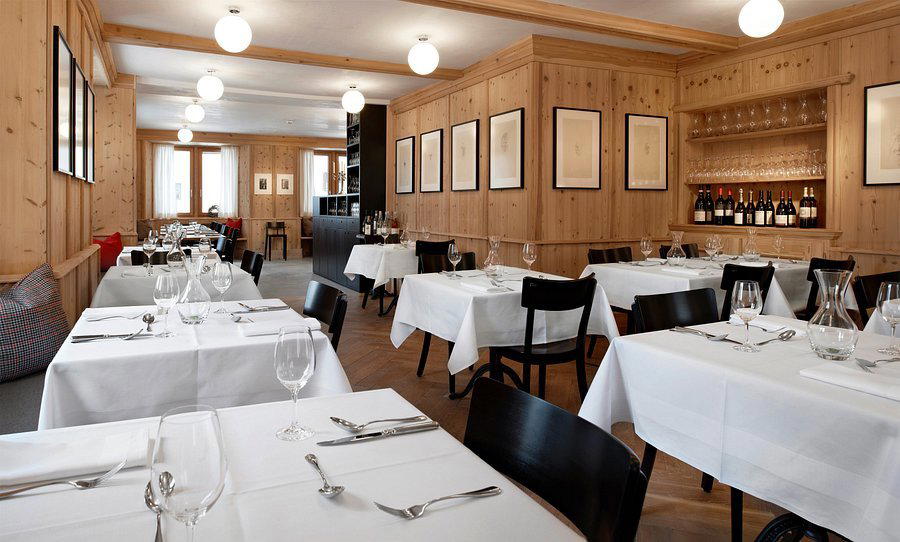
Bars in Scuol
Browse all →

Details
- Cozy
- Rustic
- Casual Hangout
- Family
- Terrace
- Local Sourcing
- A La Carte
- Vegetarian Friendly
- Gluten Free Options
Current opening hours
- Monday
- 12–8 PM
- Tuesday
- Closed
- Wednesday
- Closed
- Thursday
- 12–8 PM
- Friday
- 12–8 PM
- Saturday
- 12–8 PM
- Sunday
- 12–8 PM
Hours can change for holidays and private events. Hours as of .
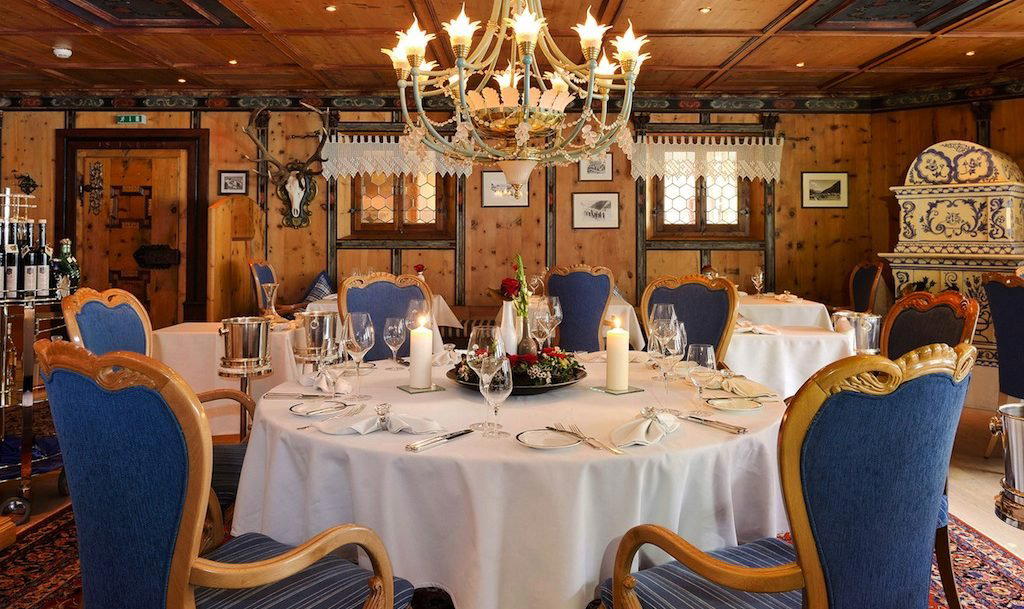
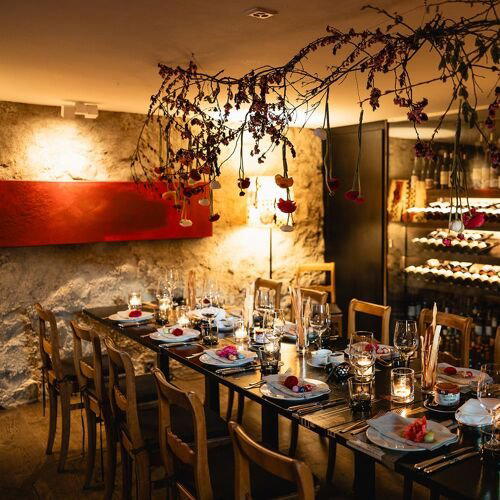
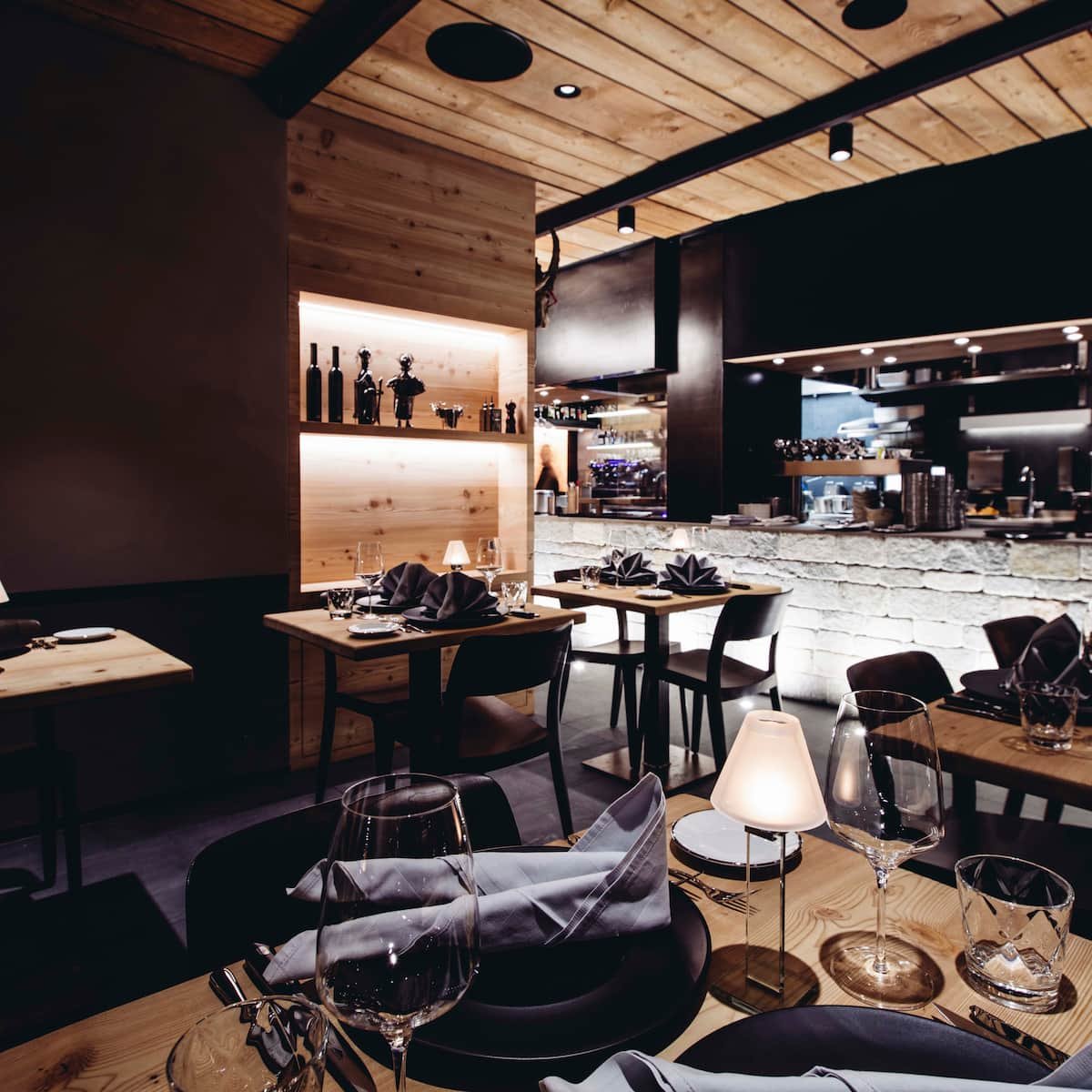
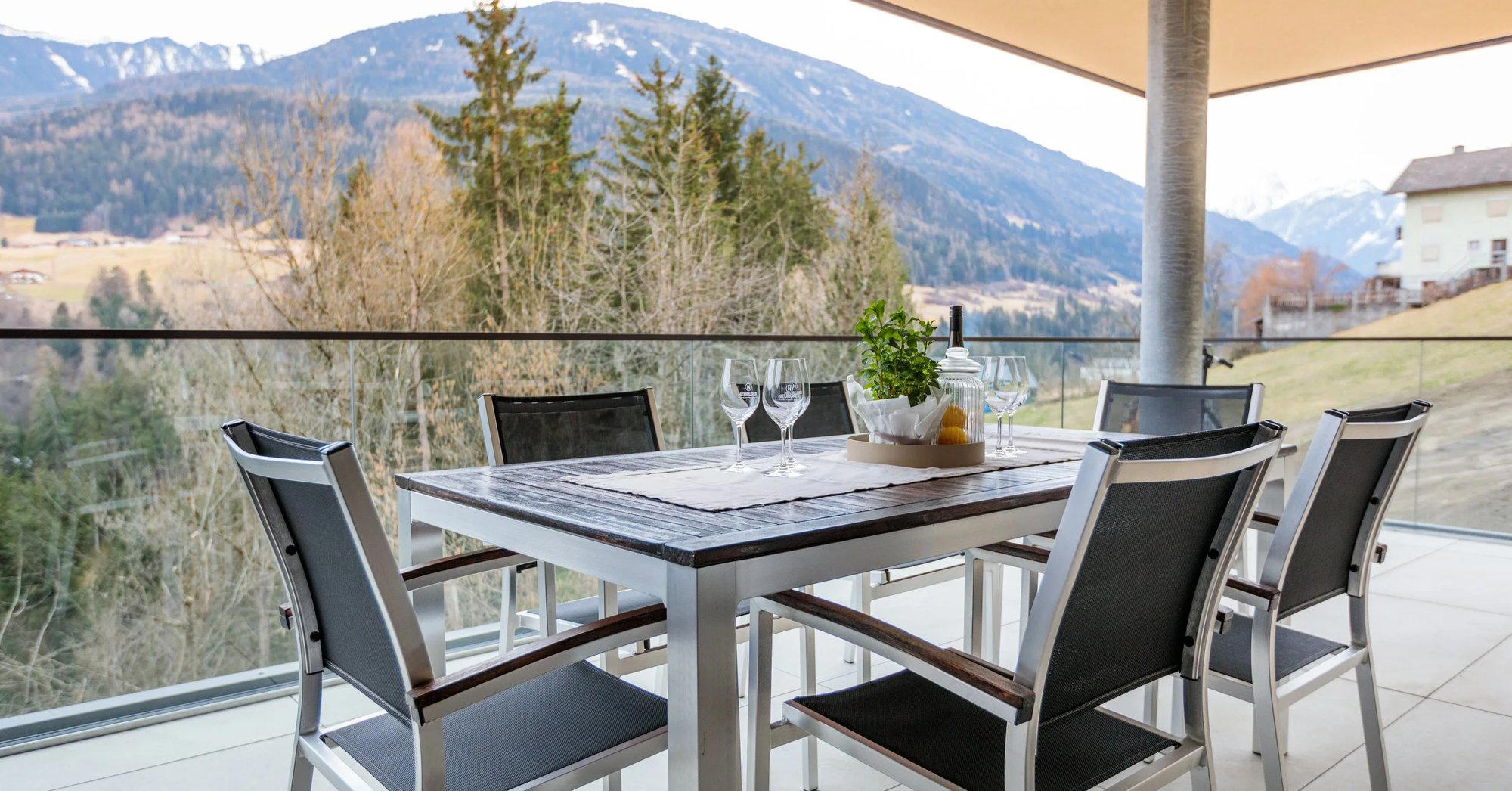
Warm, inviting, and relaxed with modern decoration and authentic charm, praised for its cozy and pleasant atmosphere.