Google: 4.4 · 7,780 reviews
Cantina Rooftop
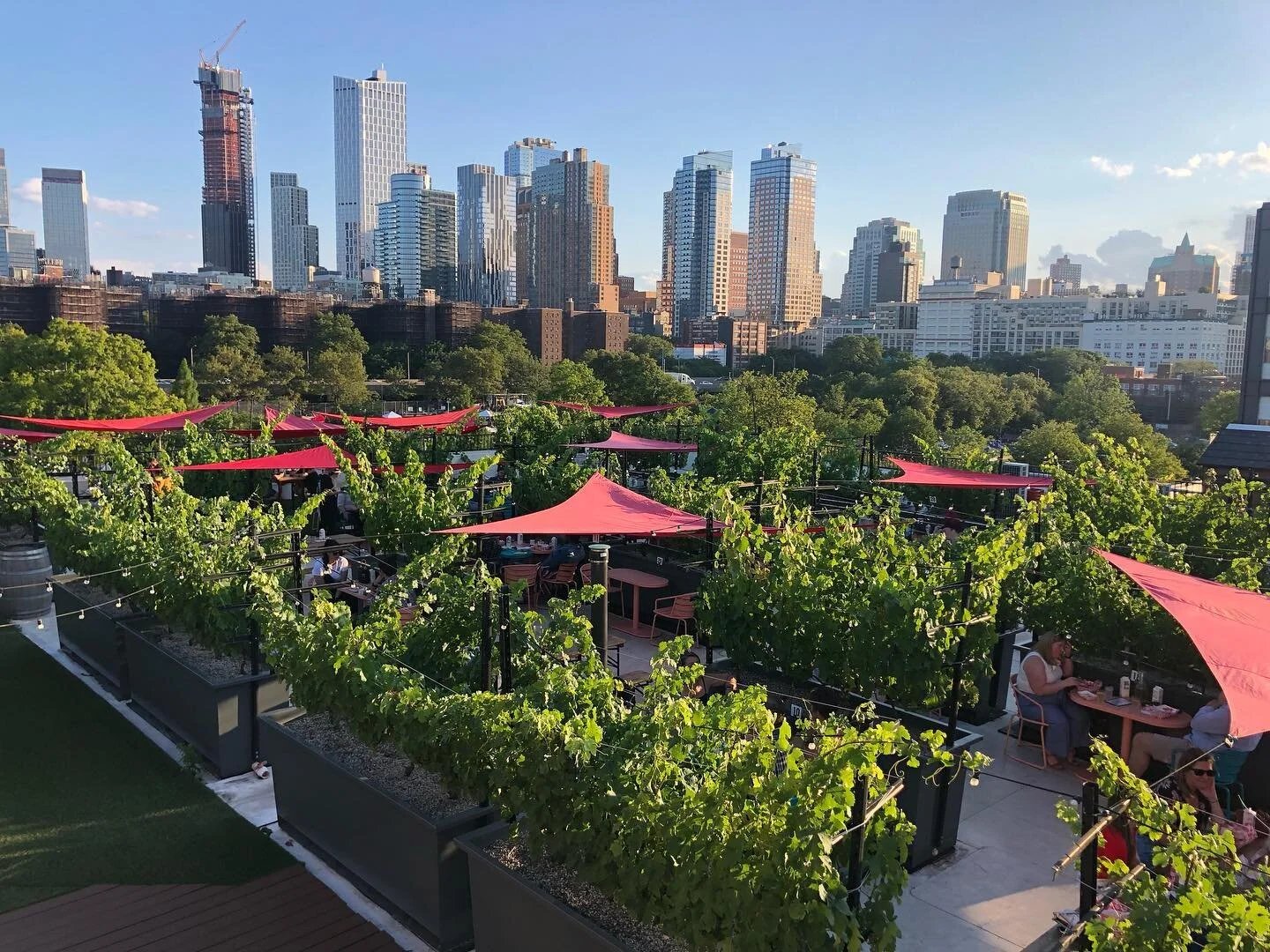
Cantina Rooftop sits above Hell's Kitchen at 605 W 48th Street, bringing an open-air drinking perch to one of Midtown's more underserved cocktail corridors. The bar operates in a city tier defined by serious spirits curation and technically driven menus. For the neighborhood, it represents a rooftop option with more ambition than the tourist-facing pubs that dominate nearby Ninth Avenue.
 Discover on Pearl
- Address
- 605 W 48th St, New York, NY 10019
- Phone
- +1 929 419 4554
- Website
- cantinarooftop.com
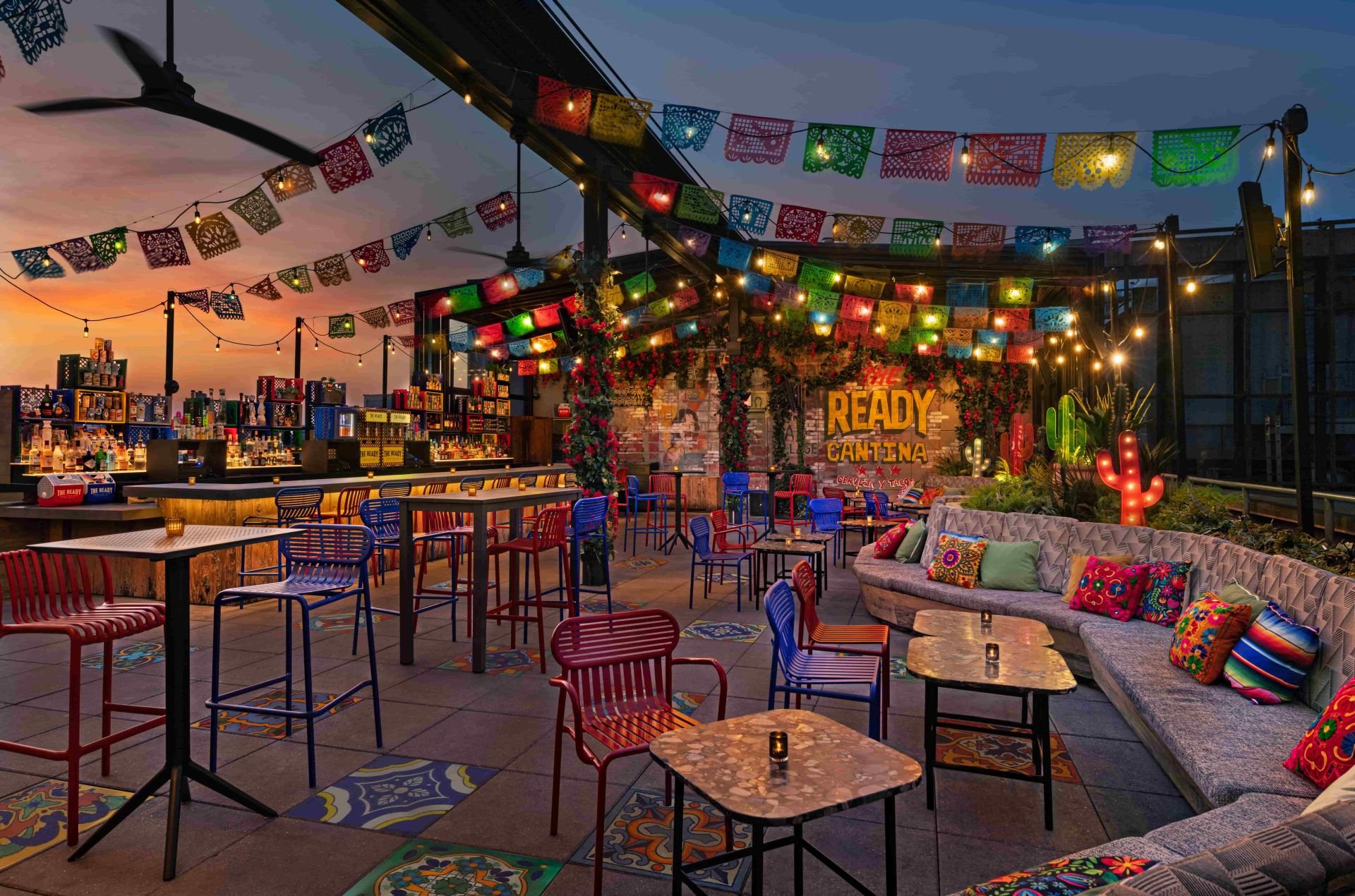
Above Hell's Kitchen: What Rooftop Drinking Looks Like in Midtown West
The approach to Cantina Rooftop tells you something about where this corner of the city sits in New York's cocktail geography. Hell's Kitchen, the stretch of Midtown West running roughly from the Port Authority bus terminal up toward the Fifties, has historically been a service-industry neighborhood where the bars existed to fuel the people who work in them rather than to attract destination drinkers. The rooftop format at 605 W 48th Street represents a different register: an open-air venue that positions itself above the street-level noise and, in spirit if not always in practice, above the tourist-facing drink programs that line Ninth Avenue below.
Rooftop bars in New York occupy a specific social contract with their guests. The view carries weight that a basement speakeasy cannot offer, and the format invites a more sustained, occasion-specific kind of drinking. What separates the strong rooftop programs from the ones that coast on altitude alone is what happens behind the bar: the depth of the spirits selection, the discipline of the cocktail program, and whether the curation signals that someone with genuine knowledge assembled the back bar or whether the list was built around margin and familiarity.
The Spirits Angle: Curation as the Differentiating Signal
New York's bar scene has bifurcated over the past decade in ways that matter for how you evaluate any individual program. On one side, you have venues like Amor y Amargo, the East Village bitters-focused bar that operates almost as a laboratory for amaro and digestif culture, where the back bar reads like a serious collector's inventory. On the other, you have Superbueno in the West Village, which channels its depth into a specific Latin spirits framework built around mezcal and rum. Both models share a common trait: a collection philosophy that gives the guest a reason to order carefully and return often.
The strongest rooftop programs in American cities follow the same logic. At Bar Leather Apron in Honolulu, a focused Japanese whisky and spirits program operates independently of the outdoor setting, meaning the view is a bonus rather than the entire point. Kumiko in Chicago applies a similar curatorial seriousness to Japanese ingredients and spirits, and the result is a bar that holds attention long after the novelty of the space fades. The lesson transfers directly to any rooftop operation: the physical setting buys you the first visit; the spirits program determines whether guests come back.
In Midtown specifically, the competition for serious drinkers has historically been thin. Attaboy NYC on the Lower East Side and Angel's Share in the East Village have long drawn guests willing to travel for a technically serious drink, but neither offers an outdoor component. A rooftop program in the 48th Street corridor that commits to a well-assembled spirits selection rather than defaulting to volume-driven cocktails would occupy a meaningful gap in the neighborhood's offering.
Hell's Kitchen in Context: A Neighborhood Still Sorting Its Bar Identity
Hell's Kitchen has changed more in the past fifteen years than almost any other Manhattan neighborhood. The restaurant density on Ninth Avenue is now substantial, with a range of cuisines that reflects the area's long history as an immigrant corridor, and the post-pandemic reopening of Broadway brought foot traffic back to a strip that had briefly gone quiet. But the bar scene has lagged behind the food scene. The neighborhood produces reliable pre-theater drinks and serviceable cocktails, but the kind of program that generates its own gravitational pull, drawing guests from other boroughs specifically for the bar experience, has been harder to find here than in the East Village, the West Village, or even parts of Brooklyn.
That context matters when evaluating what a rooftop venue on W 48th Street can mean for the area. Cities where serious cocktail culture has spread beyond its original geographic clusters, think Jewel of the South in New Orleans, Julep in Houston, or ABV in San Francisco, tend to see that diffusion happen when a few serious operators take positions in neighborhoods that had previously been underserved. Hell's Kitchen is not an unlikely candidate for that kind of shift, given its population density, its proximity to the theater district's post-show drinking window, and the number of hospitality workers who live and socialize in the area.
What the Format Demands
Open-air bars face a specific set of operational pressures that indoor programs do not. Seasonal variance in New York is real: a rooftop that works in June faces a different calculation in February, and programs that close or substantially reduce their offering during colder months lose the momentum they build over summer. The venues that handle this most effectively, and programs like Allegory in Washington, D.C. offer a useful indoor analogue for how consistent seasonal curation can sustain a bar's reputation year-round, tend to treat the seasonal constraint as an editorial opportunity rather than a limitation.
The spirits collection angle is particularly well-suited to an outdoor setting because it gives guests a reason to stay longer and order with more curiosity. A back bar assembled around depth, whether that means aged agave spirits, a serious mezcal selection, a focused rum inventory, or a whisky collection with range across regions and distilleries, converts what might otherwise be a one-drink rooftop stop into a two-hour session. That conversion matters commercially and it matters for the bar's reputation in the wider market. The Parlour in Frankfurt on the Main demonstrates how a considered spirits program anchors a venue's identity across an international peer set, a dynamic that applies equally to a Midtown rooftop trying to hold ground in a competitive city.
Know Before You Go
- Address: 605 W 48th St, New York, NY 10019
- Neighborhood: Hell's Kitchen, Midtown West
- Format: Rooftop bar
- Booking: Contact details not currently listed; check directly with the venue for reservation availability
- Hours: Not confirmed at time of publication; verify before visiting
- Price range: Not listed; Midtown rooftop pricing typically runs higher than neighborhood bar averages
- Getting there: The C and E trains stop at 50th Street; the 1 train stops at 50th Street on Broadway. Both are within a short walk of W 48th Street and Eleventh Avenue.
For broader context on where Cantina Rooftop fits within New York's bar and restaurant scene, see our full New York City restaurants guide.
A Credentials Check
A compact comparison to help you place this venue among nearby peers.
| Venue | Awards | Cuisine | Notes |
|---|---|---|---|
| Cantina Rooftop | This venue | ||
| The Long Island Bar | World's 50 Best | ||
| Dirty French | |||
| Superbueno | World's 50 Best | ||
| Amor y Amargo | World's 50 Best | ||
| Angel's Share | World's 50 Best |
Continue exploring
More in New York City
Bars in New York City
Browse all →

Restaurants in New York City
Browse all →
Hotels in New York City
Browse all →
At a Glance
- Lively
- Trendy
- Energetic
- Group Outing
- Celebration
- After Work
- Late Night
- Rooftop
- Terrace
- Panoramic View
- Outdoor Terrace
- Lounge Seating
- Communal Tables
- Craft Cocktails
- Frozen
- Tequila
- Skyline
Festive and vivacious with colorful decor, vibrant lighting, lush greenery, and live DJ creating a high-energy Mexican party atmosphere.